
(Co-written with AI this week by dictating to Astra, because it seems that’s what all the cool kids are doing now.)
For most of 2026, my answer to almost any work problem has been to open Claude. Writing, research, analysis, or an email I need to make sense of before answering. Somewhere along the way, I stopped deciding which AI to use. I just used it.
Then GPT-6 Astra arrived, and now I’m reconsidering the whole arrangement. Except I’m still using Claude, too. Each does things I want, and I haven’t settled on which jobs belong where. I’ve acquired a second assistant and promoted myself to the person who coordinates the assistants.
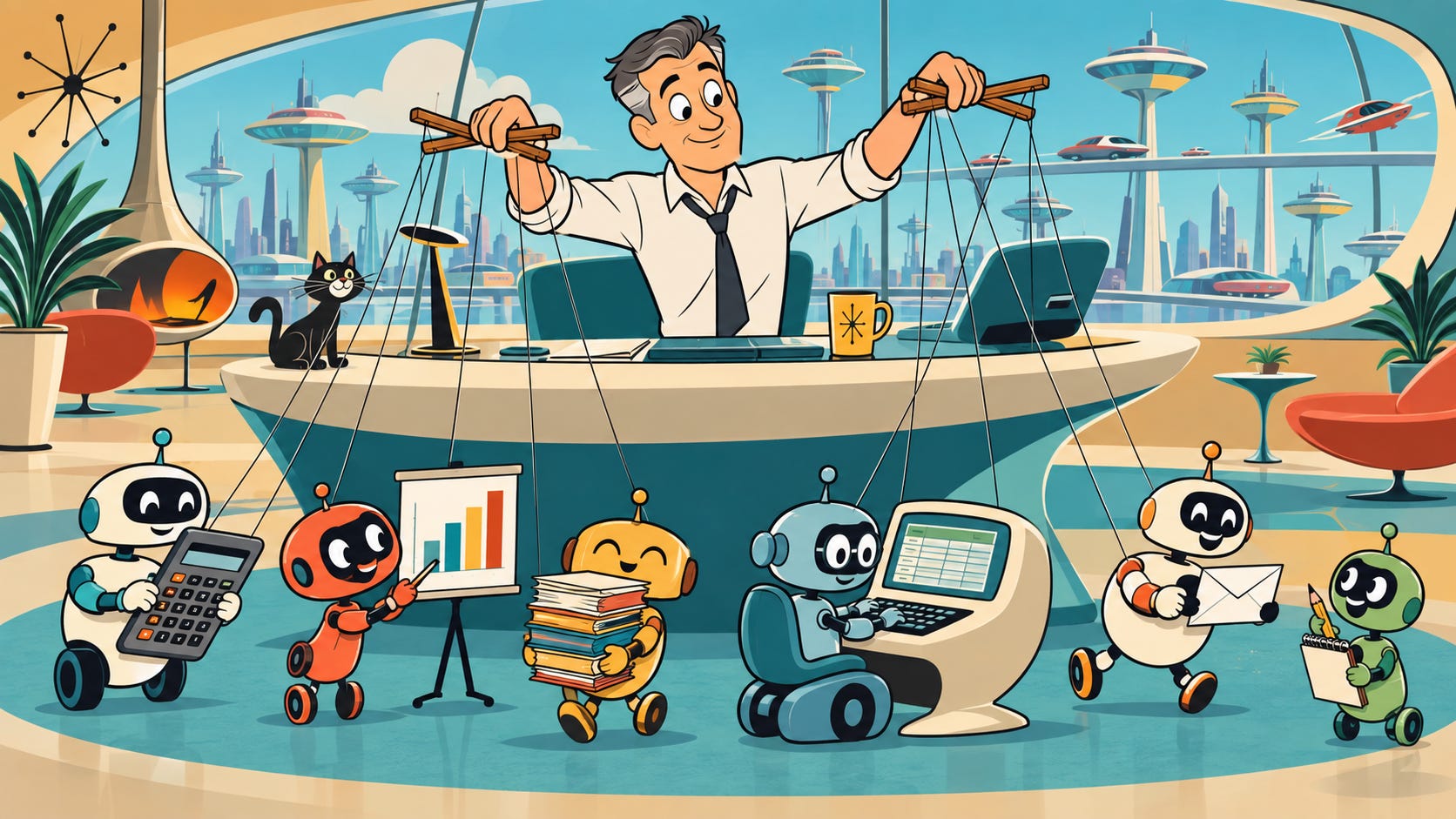
I can see the appeal of having access to both. I can also see the appeal of finishing something without first deciding where to finish it.
I spend a lot of time testing AI because understanding these tools is part of my work. Following both companies comes with the territory. I wouldn’t automatically recommend the same routine to a controller trying to finish the close or an FP&A analyst rebuilding next quarter’s forecast.
That’s the part I’m trying to work out for myself. Astra has given me reasons to reconsider. I still have to account for the effort of changing how I work.
The numbers so far …
I had plenty of company in choosing Claude for the bulk of this year. In April, Anthropic first passed OpenAI in business adoption in Ramp’s AI Index, reaching 34.4% against OpenAI’s 32.3%. By August, those figures were 43.8% and 39.8%. These estimates come from Ramp’s business spending data. A company can appear in both groups, so don’t read them as exclusive shares of the AI market. (May report; September report)
(The August numbers also predate Astra. We can’t use them to announce that its release has reversed anything.)
The benchmarks haven’t made my decision for me, either. Artificial Analysis currently gives Astra and Claude Fable 5.1 the same overall Intelligence Index score at their max effort settings. Astra does better on its automation evaluation; Fable does better on several knowledge-work and long-context measures. Depending on the work you put in front of them, you could reasonably prefer either one. (Artificial Analysis)
For readers following Anthropic’s expanding model names, Fable 5.1 is the broadly available comparison here. Anthropic says Mythos 5.1 uses the same underlying model, with different safeguards and restricted access. Most finance teams evaluating an everyday assistant will be comparing against Fable. (Anthropic)
Back to the monthly variance report
Think about the last variance report your team prepared. There were actuals and a budget, probably some account mapping to check, and at least one difference that required a conversation before anyone could explain it. Then somebody updated the workbook and wrote the commentary.
We call all of that “variance analysis,” which makes it sound like one task. Anyone who’s done it knows better.
A model might calculate every variance correctly and then invent a plausible explanation for the largest one. It might identify the operating driver but break a formula while updating the workbook. Or the analysis might be fine, and you’ll spend the next twenty minutes getting the commentary to sound like something you’d actually send.
I’ve been pretty happy, generally, with Fable’s computer use abilities, but reports on how well Astra handles this led me to take a more serious look, despite ignoring the last couple of point releases from OpenAI.
An agent that can work across applications could take over more of those steps. OpenAI reports substantial improvements, although some published comparisons use older Claude models, and some speed gains come from changes to Codex itself. What we experience depends on both the model and the software we’re using it through. (OpenAI’s launch report)
There’s also some finance-specific evidence. Model ML, a financial-software provider, found Astra and Fable 5.1 effectively comparable on analytical finance in its own evaluation, while Astra scored substantially higher on financial workflows. Its presentation scores were nearly identical, but Astra cost less per task. Those findings describe Model ML’s tests; they don’t prove either model can reliably perform your close. (Model ML)
I’d still want to see what happened to the unexplained difference. I’d want to change an assumption and see the forecast update correctly. And before putting the recommendation in front of management, I’d want to know that it agrees with the workbook. A completed task can still leave plenty of work for the reviewer.
Editing is work, too
Then there’s the writing. I’ve become increasingly frustrated with Claude’s phrasing, even on fairly ordinary tasks. This is my experience, and I haven’t run a controlled study of it. I’ve just done a lot of editing.
Something always “carries” something. Something else “holds” something. I ask for an email summary and get a paragraph in which every abstract noun appears to be moving furniture. Usually “has” or “is” would have done the job.
Even routine email summaries and inbound lead assessments can require substantial editing before I’m comfortable using them.
I’m responsible for what I send, and I expect to review it. But helping me communicate an idea is a perfectly reasonable use of AI. If I provide the thought and then have to rebuild every sentence, I’m doing more of the job than I intended. The same thing happens with variance commentary, management summaries, and explanations of exceptions.
I can’t turn that experience into a universal claim that Claude’s writing has declined. The model, the instructions, and the accumulated context can all affect an answer. But the editing time is real, and it belongs in my evaluation of the tool.
Moving, staying, and using both
Opening another account is easy enough. Getting back to the point where you can hand something over without explaining everything again takes longer. There’s the background, the examples, the files, the instructions about how you want the work done. Even after moving them, you have to check that the new tool understands them.
Keep both, and you get a different set of chores. Which one gets this task? Did I give it the latest file? Where did we decide to exclude that adjustment? You can end up checking the handoff between your tools before you even get to check the work.
Of course, staying put doesn’t make the repeated edits and manual steps disappear. You can get very efficient at working around a problem and eventually forget how much time the workaround takes. Finance people have some experience with this. There’s usually a spreadsheet involved.
Ramp reported in May that 52% of customers using Anthropic or OpenAI used both. Buying access to two tools is clearly common in that sample. The data doesn’t tell us whether those customers have an efficient way of working across them. (Ramp)
For me, changing tools might mean an irritating afternoon rebuilding a setup. For a finance department, it could mean retraining people, checking access, adjusting established procedures, and making sure reviewers still get the supporting detail they need.
The subscription is only one line in that calculation.
One job at a time
I wouldn’t ask a finance team to reproduce my current arrangement just to keep up. I’d keep the tool people already use and try an alternative on one job that’s giving them trouble.
A report that takes too much reformatting would qualify. So would a workbook that needs repeated repairs, or commentary that you consistently rewrite. Give both tools the same inputs and expectations, then compare what you have after review. Include the time spent fixing things.
If the alternative consistently improves that job enough to repay the extra effort, there’s a reason to use it. If the difference is small, keeping the work together may be more useful than getting a slightly better first draft.
I’m still working out which jobs to give each tool. Following the releases and trying them is part of what I do, so I’ll spend more time on this than most readers should need to. Hopefully, some of that time saves you some of yours.
For now, I’m using both. I’ll keep track of what gets finished, what needs correcting, and how often I have to move things between them. Eventually I’d like to spend less time managing the help.
The Pro follow-up will turn that comparison into a practical evaluation kit: matched finance tasks, a scorecard for correctness and review effort, and a worksheet for comparing the costs of staying, switching, or using both.